
- manosdeagua
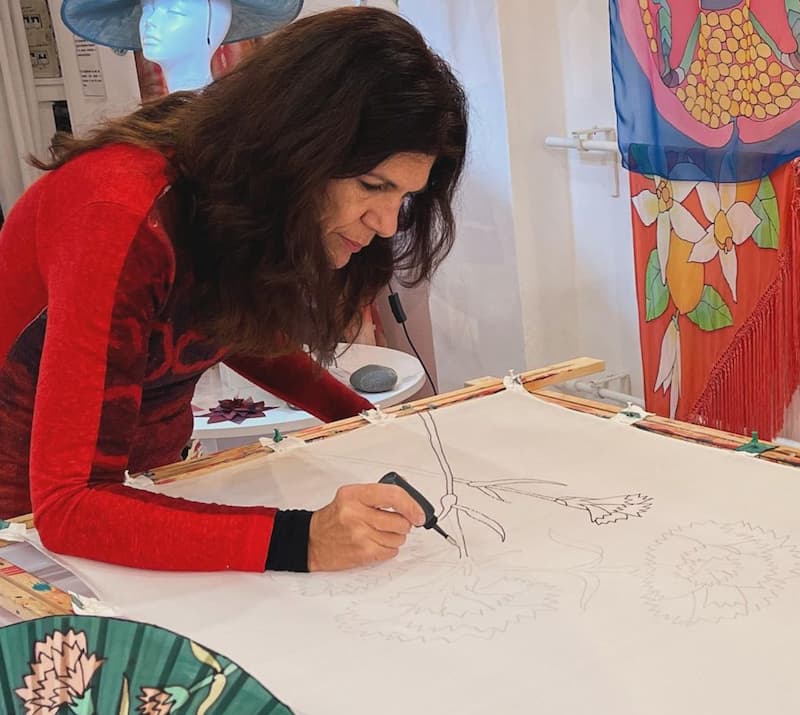
The process of creating natural silk painting is an elaborate and artisan work applicable to all ManosdeAgua products. From hand-painted fans to flamenco shawls or silk scarves. A fundamental element for the design to turn out well is correctly applying the gutta in the first stages of creation. Gutta comes from gutta-percha, a rubber-like resin that comes from the gutta-percha tree or Pallaquium. Gutta is normally used on silk to define outlines and prevent the dye from spreading.
Gutta is usually applied with plastic dispensers and metal or silicone tips of different thicknesses. Depending on the type of silk we are working with, finer or thicker tips will be required. Water-soluble gutta is fixed with an iron or in a steamer and is sold in different colors: black, gold, silver, colored, and transparent.
Being water-soluble, transparent gutta disappears after washing the silk, revealing the background color of the silk. The most commonly used are black and transparent. The latter, at ManosdeAgua, we mix with dyes to give color to the outline. In the gutta technique, the design is first transferred to the silk with a soft pencil and then the piece is stretched on a frame. Next, the outline is drawn with the gutta dispenser, to which a tip appropriate to the thickness of the line we want to make has been attached. The gutta must be left to dry very well before applying the dye so that it does not cross the created boundaries.
Once the dye is applied, it is left to dry well before placing the piece in the steamer. Once dried, the gutta and dye are fixed and all that remains is to wash and leave to dry horizontally on a dry towel.